
The attraction for beautiful and colorful things in life is but the gift of art. The modern youth has developed a craze for drawing, painting, pottery, calligraphy, origami, and many more. Art and Craft are two medians of expression but somehow differ in work and style. Art is a human activity that encompasses imagination, reality and emotional connectivity; while craft is a skill-based art that focuses on technique, utility, and goal-eccentric approach.
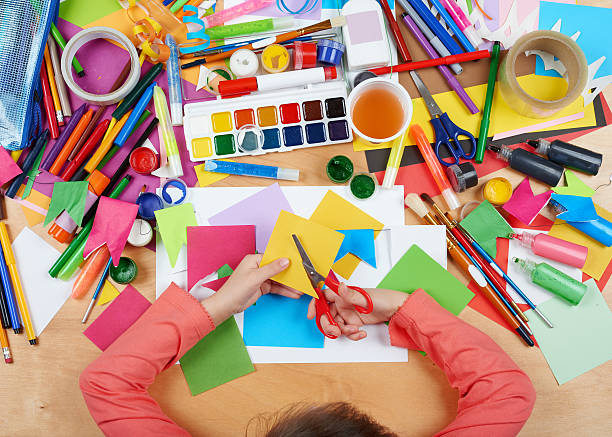
Art and Craft with Paper:
Art and Craft covers a wide array of style, technique, material/medium, tools, and expertise. Any style of paper craft can be done by a child and an adult both depending on the style being adopted by the person/trainer. There are various types of paper craft that one can play with – from decoupage to paper embossing, paper quilling, papier mâché, parchment craft, scrapbooking or journaling, greeting cards, and so on. With paper being the primary medium, we can manipulate it by folding, rolling, pasting, etc..
Origami – It is a type of japanese art that involves paper folding and sculpting without using glue and scissors (though glue is optional to use to make it more precise).
Art and craft: origin
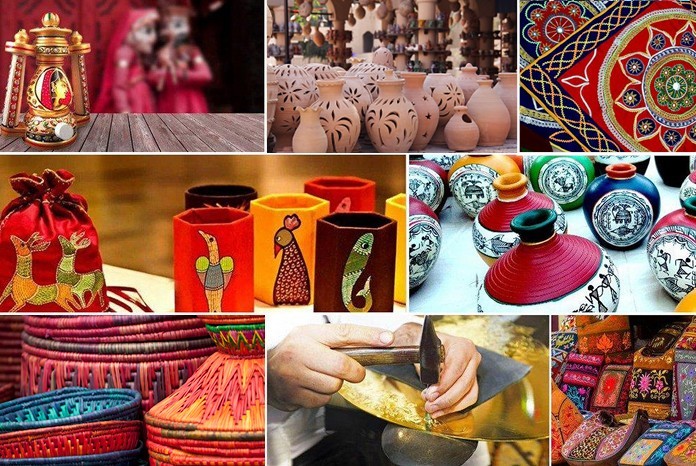
The Arts and Crafts movement originated in Britain during the 1860s to 1880s as a design movement in reaction against industrialization and mass-produced goods. Led by figures like William Morris, it sought to revive traditional craftsmanship, high-quality materials, and functional design, spreading to Europe and North America by the 1890s. William Morris (1834–1896) is widely recognized as the “father of the Arts and Crafts movement”. An English designer, poet, and socialist, he revolutionized Victorian taste by championing traditional craftsmanship, flora/fauna designs, and high-quality, handmade decorative arts over mass-produced industrial goods.
The history of handicrafts in India dates back to 5,000 BC when handmade crafts were primarily centered around religion. Several types of arts and traditional crafts of India that can be seen in modern exhibits date back to the Indus-Valley civilization, which flourished around 3,000 BC. Indian crafts underwent a major development during the Vedic Age and continued to advance in the fields of textile, stone, metal, painting, pottery, and wood.
Art and Craft Types Explained in Detail:
Mandala Art, a spiritual art which originated in India inside Buddhist monasteries, was designed to aid in the practice of meditation. It is a geometric configuration of symbols, patterns, shapes and colors. Its existence is in three types – Sand, Teaching, and Healing. Sand Mandala is a ritual followed by Buddhist monks in which mandalas are created using beautiful colors of sand and after weeks of completion, it is dismantled and destroyed. This spiritual ritual and meditation put emphasis on ‘impermanence of life’ – material things are temporary in nature, so is life and death. Modern mandala forms are categorized by various artists on the basis of the media used like theme (floral, animal), geometric (circle, square, triangle), colors (watercolor, gouache), illusion (3d, inverted), and dot mandalas. The real mandala has a centuries old visual map that represents the universe, unity, and the flow between the inner and the outer world. Mandalas have become a popular form of art therapy, as drawing and coloring mandalas require great focus and patience which promotes mental and emotional well-being.
Another type of art and craft form is Clay Art, which was found in early years in China, Japan and other Asian countries. In early times, people used to work with clay (and mix it with straw sometimes), to prepare items for storing food and water. In modern art, however, clay art has been transformed to various other forms. One can make a variety of things like fridge magnets, flower pots, photo frames, jewelry organizers, and many more items while giving beautiful textures or by painting using acrylics. Clay art is widely used for decor today. The variety of clay that exists are – water based like ceramic, polymer clay (make and bake) and air-dry clay. One could be fallible in other art forms but clay art stands apart as adaptable and simple. Its malleable and tactile properties makes it a great medium to work with, for beginners and professionals both.
Combination of Art and Craft = Fusion Art – combination of two or more art forms by an artist is called Fusion Art. It is a cross-over and fusion of culture, mediums, and styles to create new art. This art varies from artist to artist. An artist can make a sketch and for detailing, he can opt for paper quilling, or could make mandala using clay as a medium for detailing.
A type of such art is Lippan Art, it comprises of shaping clay in various shapes and sizes and later decorating it with mirrors for sparkle and shimmer. It is also known as Mud Mirror Art. Types of lippan art – traditional mud lippan (material used – clay, dung, and mirror), white lippan (created using white clay with raised pattern), mirror-focused lippan (made using mirrors and little clay details), minimalist contemporary lippan, and chalk-powder or sawdust lippan.
The world is an art and we are all an artist. As a famous Dutch painter once quoted – “I have nature and art and poetry, and if that is not enough, what is enough.”
